OpenAI and Anthropic double down on healthcare

🎆 Happy New Year from Handy AI! Celebrate 2026 by grabbing a month-long trial of Handy AI Premium, which includes an extended weekly update and some other benefits.
last week’s top stories
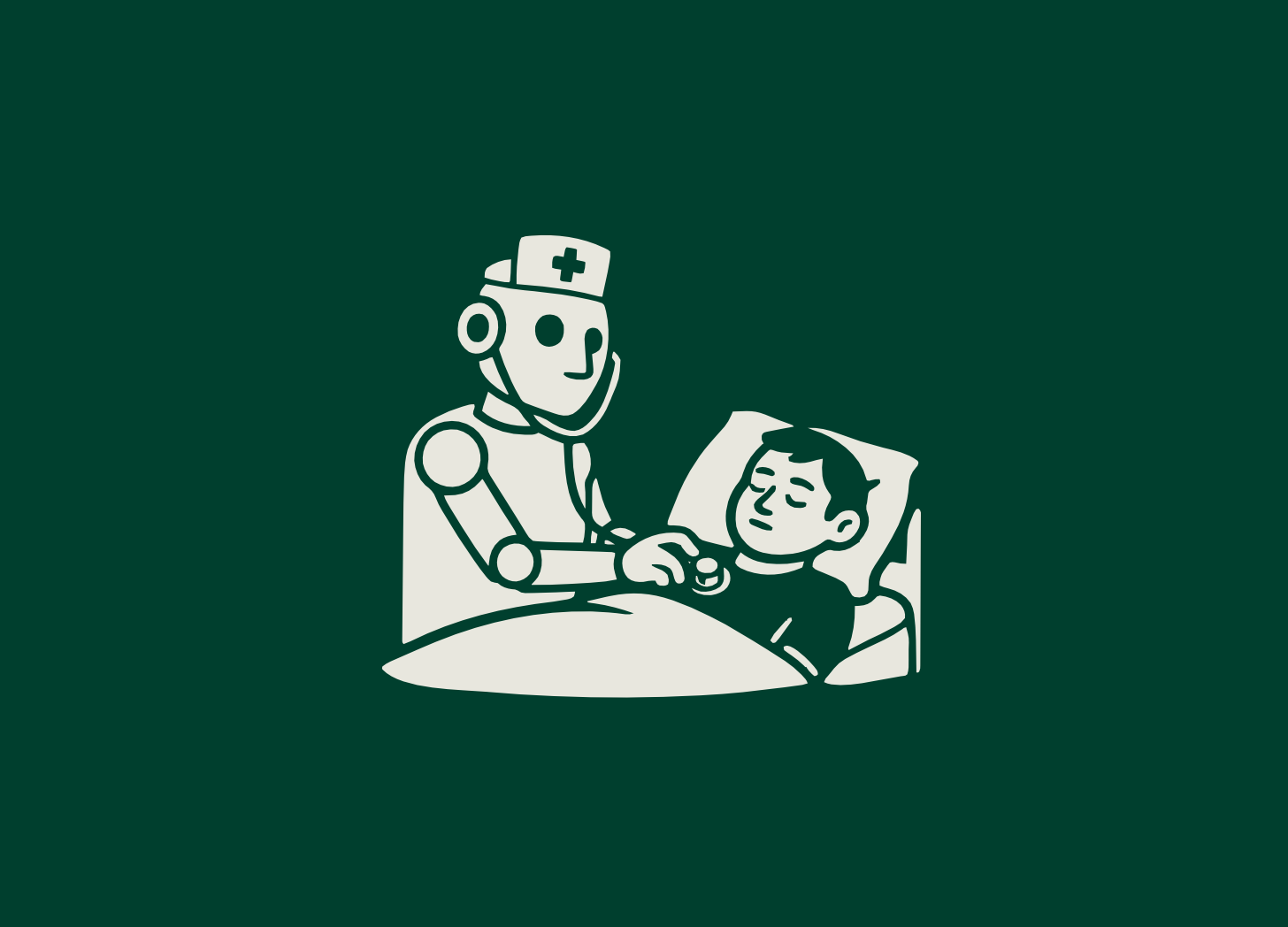
🩺 OpenAI ships a dedicated Health experience in ChatGPT. ChatGPT Health lives as a separate space with its own memory boundary, extra encryption and isolation, and a promise that Health conversations stay out of model training. It supports connecting medical records and wellness apps (including Apple Health and others), then uses that context for things like lab-result explanations and appointment prep. Read more
🧬 Claude for Healthcare arrives with real connectors. Anthropic is also pushing Claude into healthcare via HIPAA-ready products plus connectors to systems like the CMS Coverage Database, ICD-10, and the NPI Registry, which targets prior auth, coding, and claims workflows. It also adds agent skills for FHIR development and a prior authorization review template, plus optional personal-record integrations (HealthEx, Function, with Apple Health and Android Health Connect rolling into mobile betas). Read more
📧 Gmail gets Gemini-powered AI features. Gmail is leaning into Gemini for write, summarize, and “catch me up” flows that live inside the inbox instead of bouncing you to a separate chatbot tab. The product bet is workflow compression: fewer context switches, more generated drafts and thread digests, plus prompts that anchor to your actual email content. Read more
🚨 Ofcom probes X over Grok deepfakes as Malaysia and Indonesia block it. Reuters reports Grok-generated sexualized “undressing” content triggered a wave of government pressure, including UK regulator Ofcom making urgent contact and Malaysia plus Indonesia moving to block access. xAI also restricted image generation and editing to paying subscribers after safeguard lapses, which is a fascinating way to price-discriminate risk. Read more
🧾 Google pulls AI Overviews for some medical queries. Google is dialing back AI Overviews in specific health-related searches after issues where generated summaries could steer users wrong. This is a product governance move, selectively reducing generative surface area where the error cost is high and the feedback loop is brutal. Read more
🏥 OpenAI launches OpenAI for Healthcare for B2B buyers. This bundles “ChatGPT for Healthcare” plus HIPAA-oriented controls like BAAs, audit logs, data residency options, and customer-managed encryption keys, with an explicit pitch to deploy across clinicians, admins, and researchers. OpenAI also positions GPT-5.2 models as tuned and evaluated for healthcare workflows (HealthBench and related physician-led testing), plus evidence retrieval with transparent citations for source checking. Read more
🛒 Google teams up with Walmart and others for AI shopping. Google is partnering with major retailers to make shopping inside Gemini more transactional, aiming for browse-to-buy flows where product discovery, selection, and checkout happen in one conversational loop. The technical edge is structured catalog access plus account linking and fulfillment hooks, which is where “AI assistant” stops being vibes and starts being commerce infrastructure. Read more
🧠 Microsoft brings agentic checkout to Copilot ads. Microsoft Advertising is rolling out Copilot Checkout and Brand Agents, basically turning conversational intent into an assisted purchase path with brand-controlled agent experiences. This sits at the intersection of retrieval, persuasion, and payments, so the incentive gradients are… intense. If it works, “search ads” evolve into “dialogue funnels,” and every brand will demand metrics that prove the agent did more than chat politely. Read more
🏮 Major Chinese AI lab goes public in Hong Kong. Zhipu AI listed in Hong Kong in a debut Reuters frames as part of China fast-tracking AI and chip listings to fund domestic alternatives amid US-China tech rivalry. Read more
💰 xAI hits valuation chatter near $230B after a $20B round. xAI raised $20B in a mega-round, with reporting that earlier conversations pegged valuation as high as roughly $230B. Capital at this scale buys compute, talent, and distribution, but it also buys scrutiny, because investors dislike surprises like “brand risk from a viral deepfake incident.” Read more
🧱 NVIDIA kicks off Rubin as the next AI platform. NVIDIA’s Rubin platform announcement frames the next cycle of accelerated computing, pairing new silicon with system-scale design aimed at frontier training and inference. Read more
🧪 AI Research of the Week
A multimodal sleep foundation model for disease prediction
From Stanford Medicine and collaborators
Jake's Take: This paper looks at how a single overnight sleep study contains way more usable medical signal than we treat it as having. The team trains a big foundation model on raw sleep-lab channels (EEG, breathing, heart, muscle signals), using a setup where the model learns to make sense of one stream using the others, so it builds a sturdy internal representation (instead of memorizing one device layout). Then they use that learned representation to predict future disease risk across a huge menu of conditions by linking sleep studies to medical record outcomes.
If this holds up outside Stanford-style datasets, sleep turns into a cheap, passive risk sensor for population health, triage, and earlier intervention. However this promise really depends how well it generalizes across hospitals and equipment, how it behaves across demographics, and what clinicians are supposed to do when the model indicates “higher risk” for something broad like cardiovascular disease.
and then, even more news…
🧑💻 DeepSeek prepares a coding-focused V4 model for February. Reuters reports DeepSeek is lining up V4 with an emphasis on coding capability and long-context handling, with internal testing hinting at strong performance versus leading models. Coding is a useful battleground because evaluation can be more concrete: compilation, tests, tool use, repo-scale edits. Read more