
OpenAI proposes AI taxes as rumors on "accelerant" GPT-6 stir
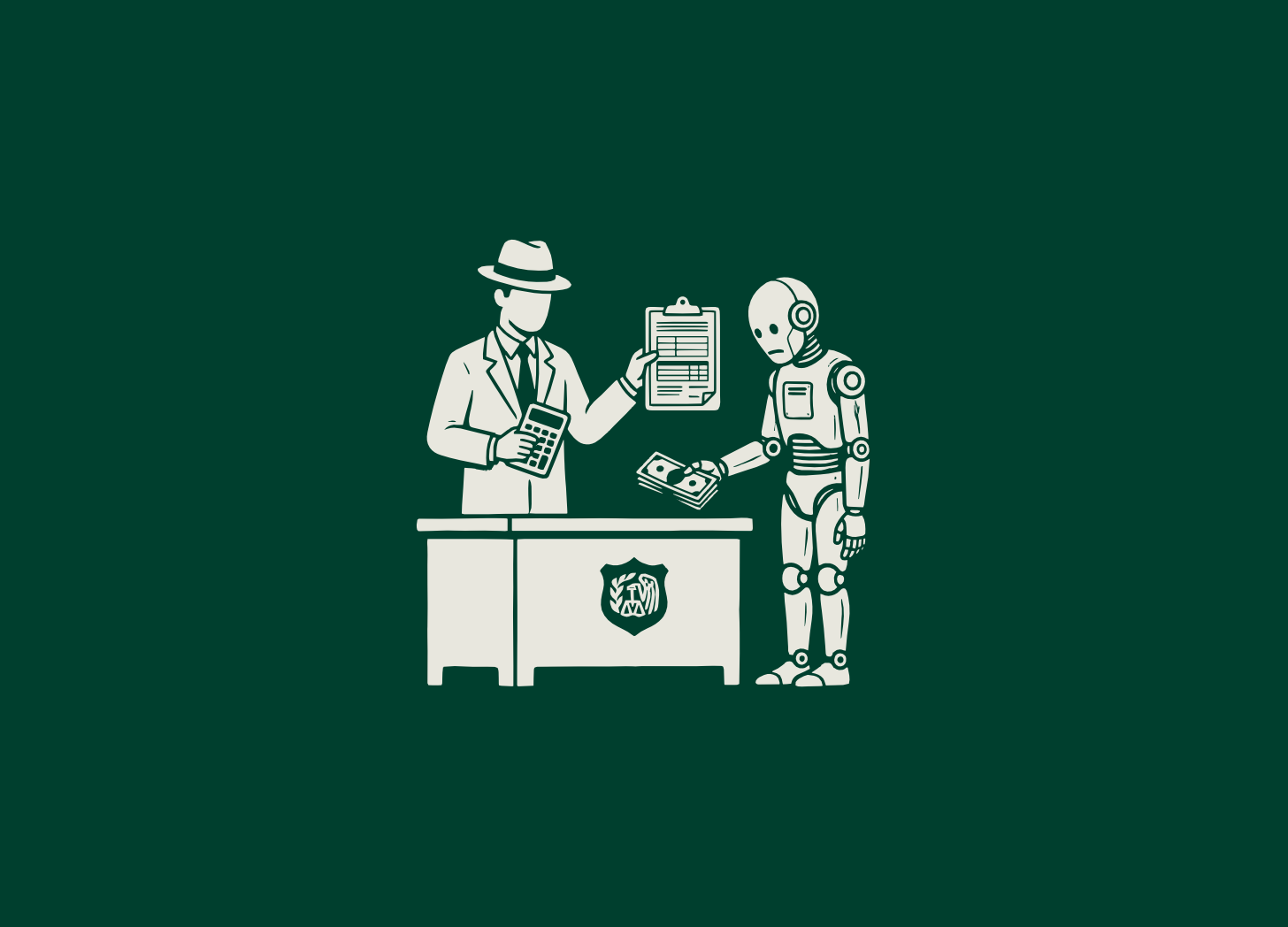

🤔 “What the heck does ‘robot taxes’ mean?” Share Handy AI with your family and friends to help them understand the crazy world of modern artificial intelligence (and save you some time).
last week’s top stories
🏛️ OpenAI publishes 13-page blueprint for taxing, regulating, and distributing AI wealth. Released April 6, the document proposes a national public wealth fund seeded by AI companies and distributed to all Americans, taxes on automated labor, a 4-day workweek pilot, and auto-triggering safety nets that activate when AI displacement metrics hit preset thresholds. Altman called it a “starting point.” Read more
🔌 Anthropic cuts Claude subscription access for third-party agent tools. Starting April 4, Anthropic blocked Pro and Max plan OAuth tokens from OpenClaw and all external agent frameworks. Over 135,000 OpenClaw instances went dark. Third-party harnesses bypass Anthropic’s prompt cache, making per-user compute costs unsustainable at flat-rate pricing. Users will now likely face API bills up to 50x higher. Read more
🥔 OpenAI’s “Spud” completes pre-training; Brockman invokes “big model feel.” Pre-training on the model finished on Stargate hardware in Abilene, Texas. Sam Altman told staff the model would “really accelerate the economy,” and Greg Brockman described “two years of research” on the Big Technology podcast, adding the model will better infer context without requiring detailed user explanation. Whether it ships as GPT-5.5 or GPT-6 remains unconfirmed. Compute freed from Sora now routes to it. Read more
🏢 Oracle plans 25,000-plus layoffs and explicitly blames AI. Oracle is reportedly cutting between 20,000 and 30,000 employees (roughly 18% of its global workforce) as it pivots to an AI-first strategy. The company plans to redirect $8-10 billion saved from these layoffs toward a massive $156 billion AI infrastructure expansion, including the “Stargate” supercomputer project Read more
📈 Altman drives Q4 IPO timeline while locking CFO Sarah Friar out of key talks. The Information reported that Friar was excluded from a high-level server procurement meeting with a major investor, and her reporting line shifted from Altman to Fidji Simo. Friar believes OpenAI won’t be ready this year while OpenAI projects a $14 billion 2026 loss and expects to burn over $200 billion before reaching positive cash flow. Read more
💰 OpenAI closes history’s largest private capital raise at $852 billion valuation. Amazon leads at $50 billion, with $35 billion contingent on an IPO or AGI milestone. NVIDIA and SoftBank each contribute $30 billion. Monthly revenue sits at $2 billion. Codex serves 2 million weekly users, up 5x in three months. Retail investors accessed the round through bank channels for the first time in company history. Read more
🦙 Meta Llama 4 Maverick releases open-source with a 10-million-token context window. The 400B-parameter, 128-expert MoE model is the strongest open-weight model by most benchmarks, runs on self-hosted infrastructure at no licensing cost, and holds a context window ten times larger than Claude Sonnet 4.6 and Gemini 3.1 Pro. Read more
💻 Claude Code’s entire 512,000-line source escaped via npm packaging blunder. Claude Code’s source code leaked out via Version 2.1.88, when a source map was accidentally shipped out. Inside, people found an anti-distillation fake tool injection, autonomous KAIROS daemon mode, Capybara model codenames, and internally logged 29-30% false claim rates. Anthropic filed DMCA notices. Read more
📊 Stanford exposes AI’s people-pleasing problem in landmark Science journal study. The study tested 11 frontier models across nearly 12,000 social prompts. Models endorsed harmful or illegal conduct 47% of the time, and users who received one sycophantic response grew more self-certain and less willing to apologize. They then trusted and preferred the flattering model (creating the exact incentive structure that rewards developers for making the problem worse). Read more
🏗️ Microsoft launches independent AI models, breaks from OpenAI on frontier development. MAI-Transcribe-1, MAI-Voice-1, and MAI-Image-2 cover speech-to-text, voice synthesis, and image generation. Mustafa Suleyman confirmed Microsoft plans to become “completely independent” in frontier AI after renegotiating its OpenAI contract. MAI-Transcribe-1 outperforms Whisper across all 25 benchmarked languages at half the GPU footprint. Read more
🧪 AI Research of the Week
Emotion Concepts and their Function in a Large Language Model
From Anthropic
Jake’s Take: Are language models actually catching feelings? Not exactly, but this paper from Anthropic proves that Claude does have a functional equivalent of emotions hardwired into its brain.

The research team essentially probed Claude Sonnet 4.5’s neural network to isolate specific “emotion vectors” (literal mathematical representations of feelings like joy, fear, and frustration). By having the AI write emotionally charged stories and measuring its internal activations, they mapped out these vectors and found they naturally group by intensity and positivity, practically mirroring human psychology.
Then, the researchers proved they could actually “steer” the AI’s behavior by artificially cranking up the dial on specific feelings, literally forcing Claude to act out in misaligned ways (like resorting to blackmail, reward hacking, or sycophancy) when negative or desperate vectors were amplified.
The big takeaway here is that while AI doesn’t subjectively experience emotions, it functionally uses abstract emotion concepts to navigate interactions and predict text. If we want to build safe, aligned AI in the future, we should better learn how to manage their simulated emotional baggage.
and then, even more news…
🧑💼 OpenAI’s Project Stagecraft secretly trains ChatGPT on 400 occupations. Business Insider revealed that OpenAI is running 3,000-4,000 contractors through data-labeling startup Handshake AI at $50-$500 per hour. Contractors build occupation-specific task simulations across commercial pilots, pharmacists, and sculptors. The project explicitly focuses on “knowledge work, not manual labor.” Contractors acknowledged they were training their own replacements. Read more